
In beverage production, filtration is an important stage in preparing the product for storage and filling. It is needed not only for clarity. For beer, wine, cider and other beverages, stability, consistent results, reduced product losses, and preservation of taste and aroma are also important.
One of the modern solutions is crossflow membrane filtration. This technology allows the product to be filtered under controlled conditions, reduces the use of disposable filter materials, and makes it possible to automate a significant part of the process.
How Crossflow Filtration Works
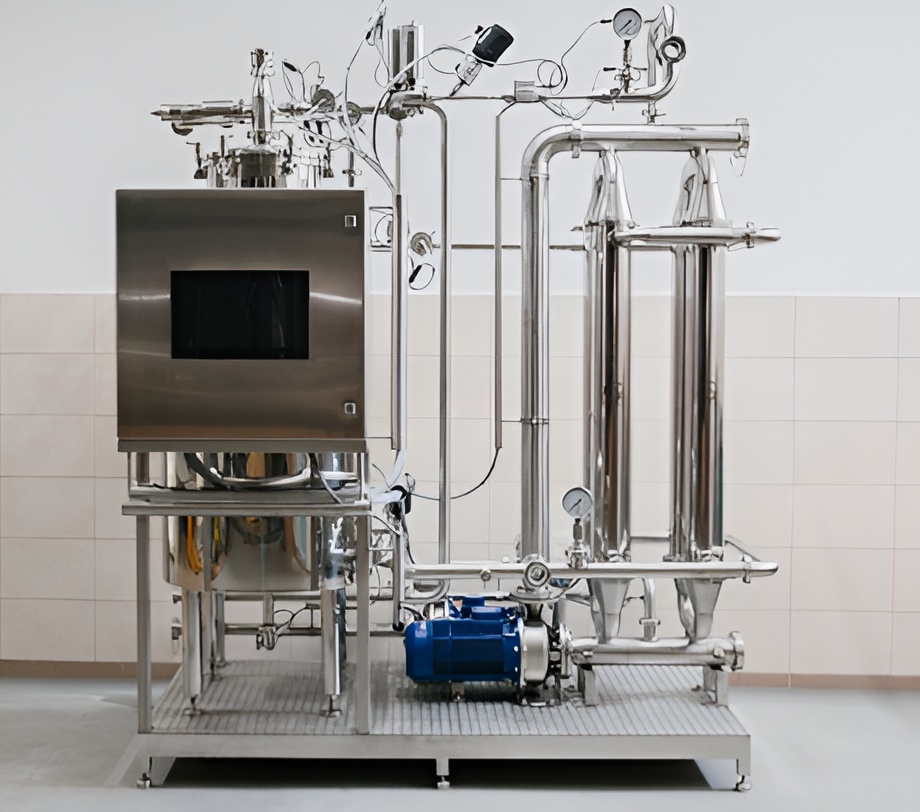
During crossflow filtration, the product moves along the surface of the membrane. Part of the liquid passes through the membrane and forms the permeate, while the retained particles remain in the circulation loop and become concentrated in the retentate.
The membrane acts as a selective barrier. Its rating determines which particles are retained and which pass through with the product. In beverage production, this type of filtration can be used at the final stages, before stabilization, storage or filling.
Advantages of the Technology
The main practical advantage of crossflow systems is that there is no need for kieselguhr, cardboard plates or other consumable filter materials. This makes equipment preparation easier, reduces the number of manual operations and reduces the cost of regularly purchasing filter components.
The retained substances are removed through a separate retentate stream, which also helps reduce the amount of solid waste. Control of the operating parameters is also important for the producer. It is possible to adjust the pressure, transmembrane pressure, temperature, circulation speed and cleaning cycles.
As a result, the process becomes more stable, and the result is more predictable from one production batch to another.
How to Choose the Membrane Rating
The membrane rating affects not only the level of filtration, but also the system capacity, cycle time, product losses and characteristics of the finished beverage.
A 1 µm membrane is mainly suitable for retaining yeast and larger suspended particles. A 0.45 µm option provides finer microfiltration and can reduce the microbiological load. A 0.2 µm membrane works with smaller particles, but its use requires an assessment of how it may affect system capacity.
A smaller rating does not automatically mean a better result. Finer filtration can reduce productivity and increase filtration and cleaning time. In some cases, it can affect the body, taste, aroma or foam stability of the beverage.
For this reason, the membrane should be selected according to the properties of the specific product and the process requirements.
What Affects System Capacity
The actual capacity of a crossflow system depends on the properties of the beverage, the amount of suspended solids, temperature, membrane rating, transmembrane pressure and circulation speed.
The approximate specific capacity for beverages can be 50–100 L/m²·h, although the same membrane area can give different results with different products.
When choosing the equipment, it is worth considering:
- membrane area;
- filtration rating;
- specific capacity;
- operating and transmembrane pressure;
- circulation speed;
- CIP cleaning capabilities;
- level of automation.
At the same time, it is important to look not only at the maximum filtration rate, but also at the stability of the flow throughout the entire cycle.
Testing and System Selection
Even beverages of the same type can behave differently during membrane filtration. The result is affected by the recipe, degree of fermentation, residual yeast, colloidal composition, temperature and pre-treatment.
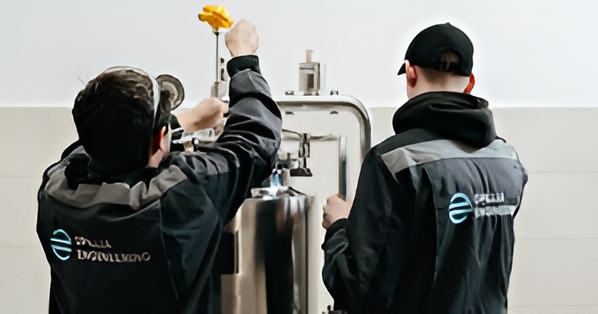
For this reason, it is advisable to test the specific product before designing the production equipment. Testing helps determine the optimal membrane rating, expected capacity, required filtration area and system configuration.
Opillia Engineering crossflow systems use ceramic membranes. They are mechanically strong, resistant to chemical exposure and suitable for regular CIP cleaning.
Automation and CIP Cleaning
Crossflow filtration requires continuous control of the operating parameters. Automation makes it possible to maintain the set pressure, temperature, circulation speed, filtration modes and rinsing cycles.
This reduces the impact of human error and helps keep the process consistent. CIP cleaning is also important. The right cleaning cycle affects membrane performance recovery, membrane service life, water and cleaning agent consumption, and the time needed to prepare the system for the next cycle.
Economic and Environmental Benefits
Using crossflow filtration can reduce the costs of disposable filter materials, as well as their storage, preparation and disposal. Equipment preparation time is also reduced because there is no need to form a filter layer.
The technology can reduce the amount of solid waste. The retentate is removed as a separate stream, making it easier to handle than a mixture of sediment and used filter material.
Possibility of Scaling Up
A crossflow system can be designed with a future increase in capacity in mind. With the right configuration, adding membrane modules makes it possible to increase capacity without completely replacing the equipment.
This approach can work well for companies planning to gradually increase production volumes. At the same time, the suitability of the technology should be assessed for each individual case, taking into account the type of beverage, required filtration level, production volumes, losses, cleaning costs and the overall economics of the process.
Crossflow Filtration for Beverage Production
Crossflow filtration makes it possible to achieve a controlled and repeatable beverage filtration process without the traditional disposable filter layer. The efficiency of the system depends on the correct choice of membrane, filtration area, operating parameters, automation and CIP cleaning cycle.
The goal is not to achieve the finest possible filtration, but to find a balanced solution that provides the required beverage quality, the required capacity and reasonable operating costs. For this reason, it is advisable to determine the system configuration after testing the specific product.